
Bimanual imitation learning
Record two-arm demonstrations with leader arms, train a policy, and run it on the same arms.
The problem
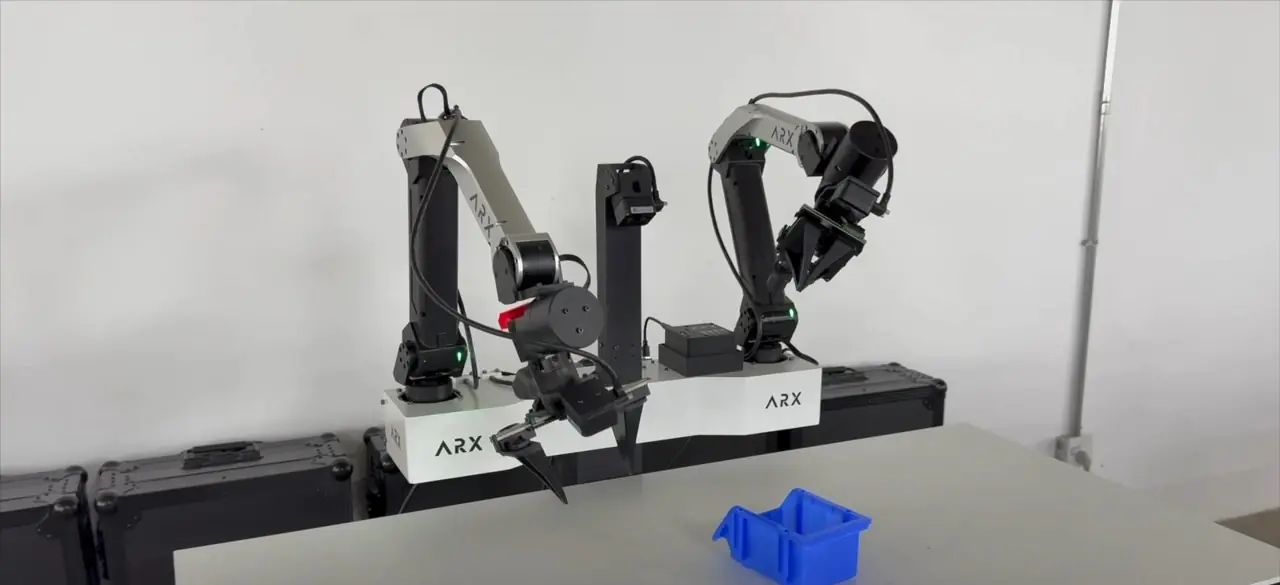
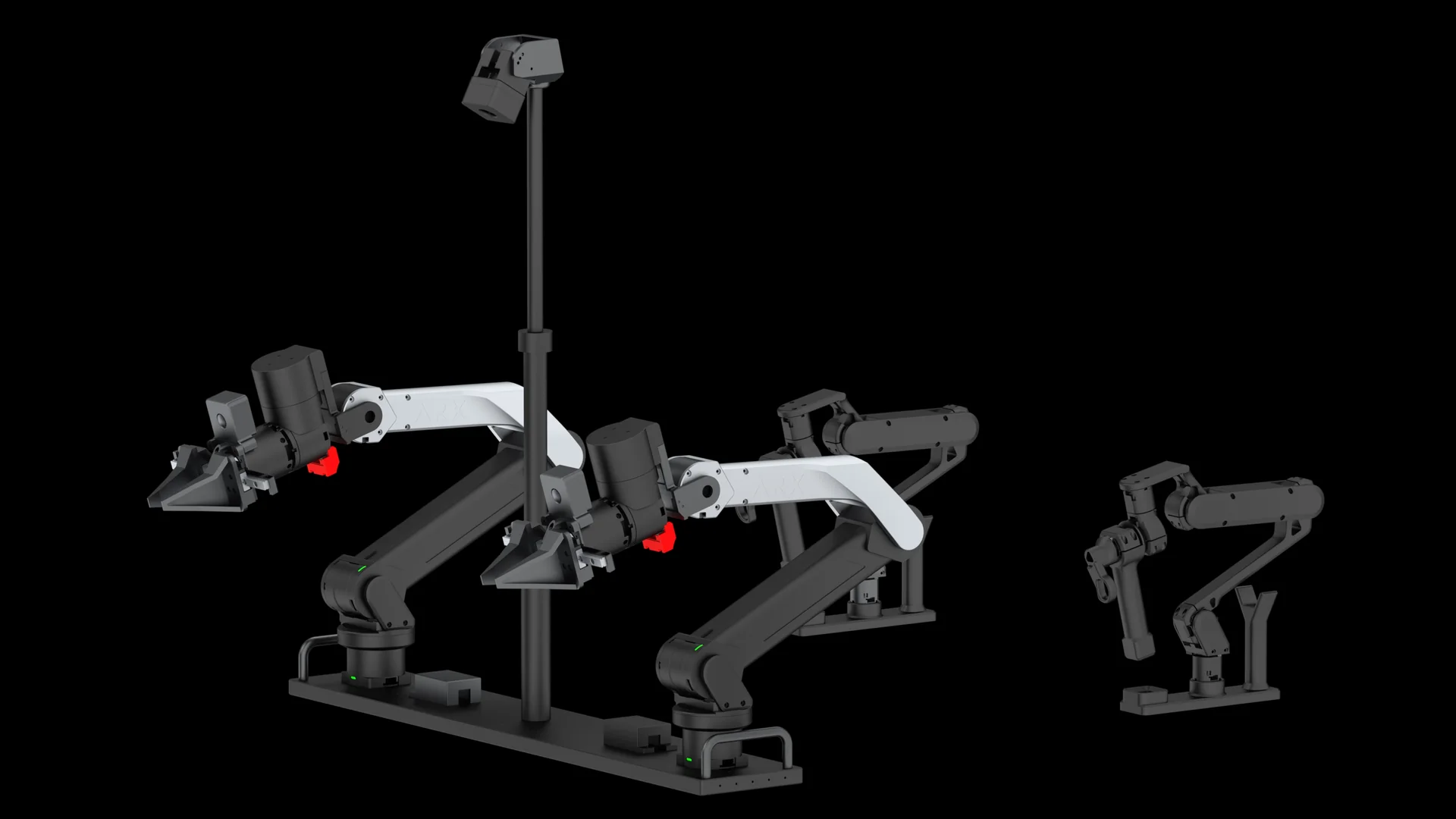
Imitation learning needs many clean demonstrations from the same hardware the policy will run on. Two-arm tasks such as folding, sorting and assembly need two follower arms, two leader arms and cameras on the wrists and above the table.
How it works
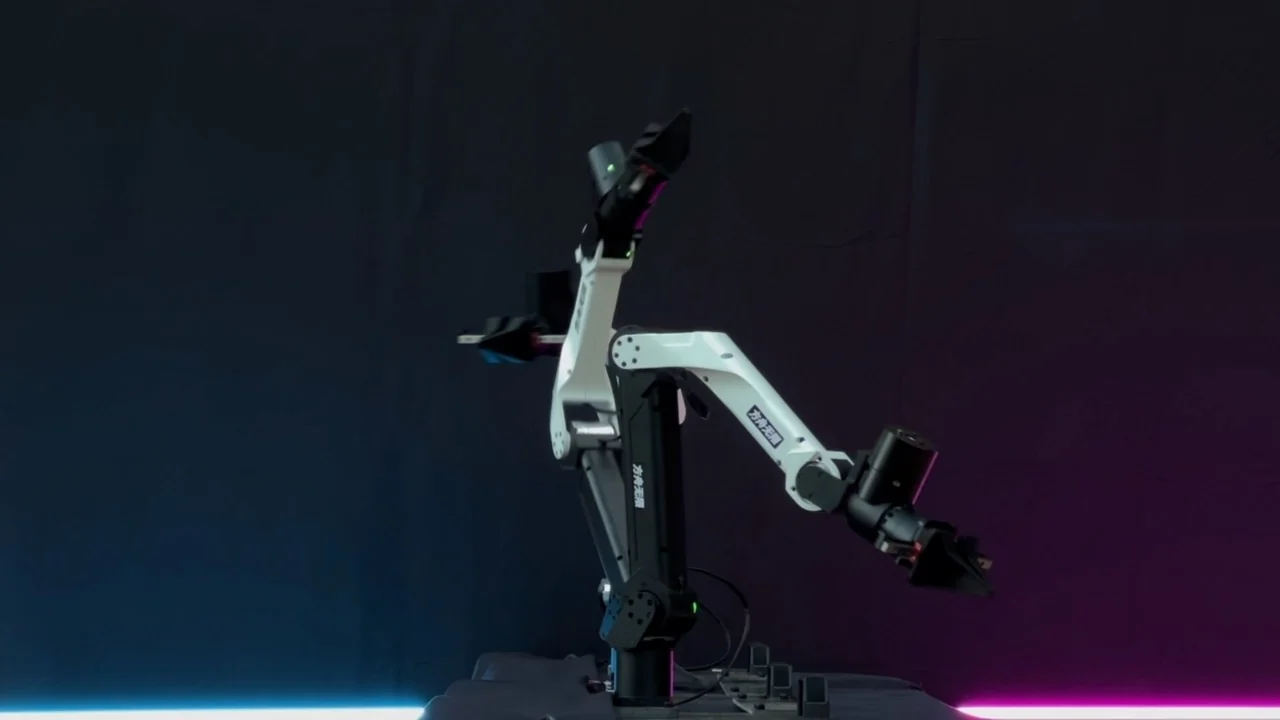
- 01Move the leader arms by hand; the follower arms copy the motion.
- 02Cameras on the head and wrists record with the arm states.
- 03Train an ACT-style policy on the episodes (ARX's 02_train.sh).
- 04Run the policy on the follower arms (03_inference.sh).
Evidence
Public sources only. All research
- π0 by Physical Intelligence lists "Bimanual ARX" in its training mixture.
- Motus ran its real-world experiments on AC-One.
- ViA (Stanford, CoRL 2025) thanks ARX for its robot hardware.
Questions
Is this an ALOHA alternative?
It is the same leader–follower idea. ARX's own data-collection repositories are adapted from mobile-aloha and act-plus-plus, and run on ARX arms.
How many demonstrations do I need?
It depends on the task and the model. Plan the number of stations around how many demonstrations a day your team can record.
Further reading
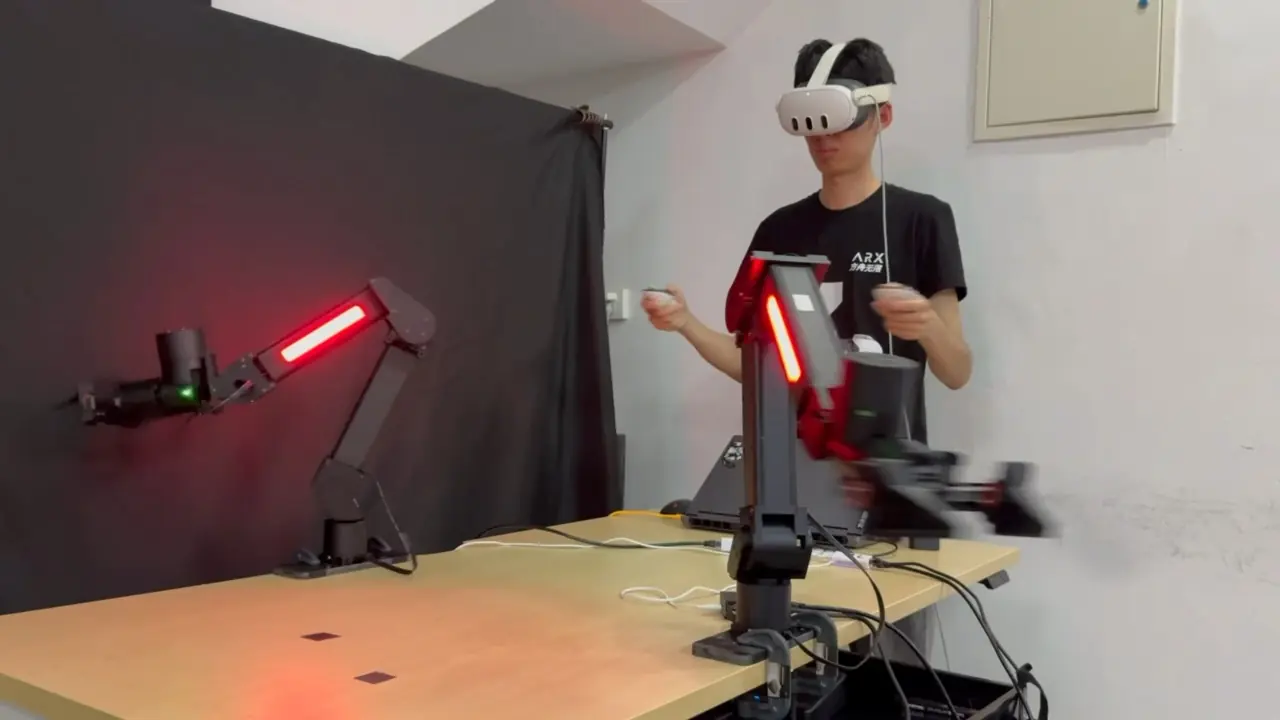
Leader–follower teleoperation: a practical guide for robot learning labs
What leader–follower teleoperation is, why imitation-learning labs use it, what hardware it needs, how it compares with VR and SpaceMouse control, and…
Read →How to set up a bimanual data-collection station
A step-by-step checklist for a two-arm teleoperation station: arms, cameras, computer, CAN binding, camera mapping, and the collect–train–deploy loop,…
Read →Price this setup.
Tell us how many stations and where they ship.